


Five books to read this summer
From gripping fiction to groundbreaking social critiques, our faculty have chosen five books for your summer reading



In 30 seconds
Read an exquisite tale of grief, family, love and choices
The biography of one of the world's least known but most consequential investors
A provocative exploration of cultural taste and social inequality
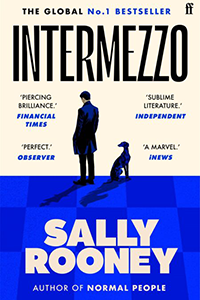
Intermezzo (2024)
By Sally Rooney
Recommended by Dan Cable, Professor of Organisational Behaviour
It’s been billed as “Psychological Fiction” and I agree with that, but what captured me the most were characters that I believed in. I felt I actually knew them, as real humans, so when they made choices in their lives, I was immersed. This is magical to me about writing, the ability to make up characters, then make them act in ways that summon real feelings of connection.
The topic of the book may not sound compelling at first: two brothers, one a successful barrister in Dublin, the other a shy geek chess player who is younger by a decade, are mourning the death of their father. They don’t like each other much. They both have issues with their love lives and their careers. How you see them at the beginning changes a lot by the end of the novel, and you’ll probably gain insights about the complexity of love. But I’m recommending it because by the novel’s close I wanted to hang out with the characters and was sad to remember they’re not real.
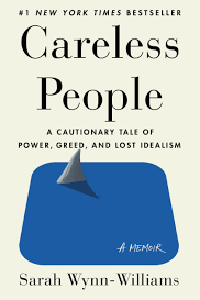
Careless People: A Cautionary Tale of Power, Greed, and Lost Idealism (2025)
By Sarah Wynn-Williams
Recommended by Ioannis Ioannou, Associate Professor of Strategy and Entrepreneurship
The author, a former Facebook executive, offers a rare insider account of what it’s like to witness – firsthand – the moral drift of a company once rooted in idealism but ultimately consumed by scale, influence and market dominance.
What I found striking is how honestly the book grapples with the dissonance between internal narratives and external consequences. Wynn-Williams doesn’t settle for easy blame or heroism; instead, she traces the slow erosion of responsibility in an organisation that struggled – and often failed – to reckon with its own power. It’s a sobering read, but an important one, especially for anyone thinking seriously about leadership, ethics or the role of institutions in a world facing compounding crises.
For me, this book is less about Facebook per se, and more about what happens when governance fails to keep pace with ambition.
Discover fresh perspectives and research insights from LBS
“The book grapples with the dissonance between internal narratives and external consequences”
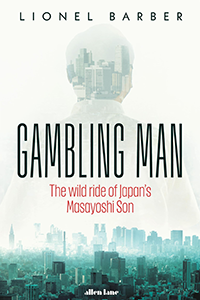
Gambling Man: The Wild Ride of Japan’s Masayoshi Son (2024)
By Lionel Barber
Recommended by Linda Yueh, Adjunct Professor of Economics
The former editor of the Financial Times has written a page-turner of a biography of the founder and CEO of SoftBank, one of the most disruptive Japanese companies in the post-war period. Son had up-ended the corporate scene in Japan as well as challenged the venture capital landscape through his Vision Fund.
In Barber’s telling, Son’s background as an ethnic Korean in Japan helped fuel his ambition and gambles on companies that have transformed business, including Yahoo and Alibaba as well as failures such as WeWork.
Known as Masa, Son has faced bankruptcy several times but always emerged more determined. Perhaps the quote that captures the essence of the “gambling man” (which is quoted in the book) is from Apple’s Think Different advertising campaign from 1997: “The people who are crazy enough to think they can change the world are the ones who do.”
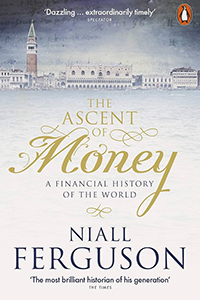
The Ascent of Money: A Financial History of the World (2008)
By Niall Ferguson
Recommended by Nader Tavassoli, Professor of Marketing
From the origins of gold and early banking to the rise of complex financial instruments and the emergence of cryptocurrencies, Niall Ferguson traces how money, in all its forms, has been fundamental to the growth of business, capitalism and globalisation. As we move into the era of decentralised finance, The Ascent of Money serves as a critical reminder: while technologies evolve, the underlying principles of trust, risk and interdependence endure. Business students and professionals alike would benefit from studying the history of finance – from the bond markets of Renaissance Italy to the crises of modern capitalism – to better understand and navigate the disruptions of the future.
“Our judgments of beauty, refinement, and taste are shaped by our social upbringing – what he termed habitus”
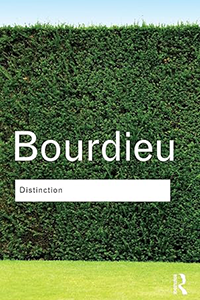
Distinction: A Social Critique of the Judgment of Taste (1979)
By Pierre Bourdieu
Recommended by Stefano Turconi, Teaching Fellow of Strategy and Entrepreneurship
For my summer reading, I’ve gone back over four decades – to 1979 – when Pierre Bourdieu, one of France’s great post-war sociologists, published what would become his best-known, most widely cited, and most provocative work: Distinction. In this seminal tome, Bourdieu explores the relationship between cultural taste and social classes. His central argument dismantles the Kantian idea of aesthetics as autonomous and universal, revealing instead how our judgments of beauty, refinement, and taste are shaped by our social upbringing – what he termed habitus.
From luxury cars and designer clothing to canonical works of art, Bourdieu shows how such preferences are not merely personal choices but indicators of class position. He compels us to recognise, often uncomfortably, that what we deem “good taste” is rarely innocent.
Bourdieu exposes the existence of an "aristocracy of culture", where discernment attempts to reconcile reason and sensibility – between the pedant who understands without feeling and the mondain who enjoys without understanding. Ultimately, Distinction offers a powerful challenge to the way we judge and value the world around us.