


Lessons from the frontier of AI innovation
Focus on the problem you're solving and find the right people for your team, AI entrepreneur Karthik Suresh MBA 2017 tells Sukrit Puri



In 30 seconds
Companies are trying leverage OpenAI and other large language models (LLMs) to do the work humans do, but they haven’t fully succeeded yet.
ChatGPT is primarily a consumer product and its chat interface is inadequate for complex business workflows.
Rather than trying to build software to manage the work done by people, organisations should build AI agents to do the work directly.
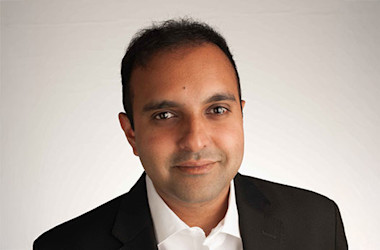
AI entrepreneur and LBS alumnus Karthik Suresh MBA2017
Entrepreneurship is very much a personal journey of self-discovery. Why did you become a founder?
For me, the biggest risk in life is to take no risk. It’s less about wanting to make money, because nine out of 10 startups fail and very few entrepreneurs actually make it. It’s a very hard game – the only reason to do it is because you’re passionate about a specific idea that you want to see existing in the world. That’s the only way to succeed – if your goal is to IPO the company or make a ton of money and retire, you almost never make it, because at some point the going gets so tough. Just get a job at Google or McKinsey if you don’t have that conviction.
Being a first employee at Craft, you saw entrepreneurial decision-making close up. Did that give you the spark to want to become a founder yourself?
That was definitely one of the things that helped me become a founder, and become a more successful founder eventually. Being the first employee also meant I had a salary and a cushion without having to worry about who’s paying the bills of the company. And I could quit any day and get a job. As a founder, you can’t do that – you have your investors and you have to keep going. Being in a passenger seat without actually taking the risk and going through the mental stress of being a founder was a game-changer.
Craft was a data intelligence company and we had to pivot several times to find product-market fit. We started selling to finance, then to sales. Eventually we found product-market fit in the supply-chain vendor due-diligence space. None of us had experience in that area, so the journey of testing different personas and going from zero to 100 employees and multiple rounds of funding in a matter of three years was a crazy rollercoaster and I was in the front seat. That definitely set me up for success in the next few years.
One thing students always think about when joining early-stage startups is the founders’ vision. How flexible do you need to be regarding this vision that you’re buying into?
If you’re in the first five or 10 employees, think of yourself as an investor. Would you back this team with your own money? You’re putting your time there, which is actually more valuable than money, so you’ve got to align. Who’s the founding team? What’s their background? What’s the product? What’s the market? Is it big enough? What does the go-to market strategy look like? What’s the differentiation today? Are there existing competitors? Are they creating a new category? It always comes down to people. It’s also very rare that the idea you start the company with is the idea that takes off. Given the failure rate, you need to treat it more as an experience and a journey that you signed up for, and trust that it’ll lead somewhere.
How do you assess the founding team?
I have a very strong opinion on this! You should ask all the questions necessary to make sure they have actually thought this through and it’s not a hobby project for them. How do you know they’re serious about it? That they’re not going to quit in three months? Does the plan make sense? How much time they have put in? How much conviction do they have in the idea? That said, I don’t care about the idea, I don’t care about the product – I’m investing in the team. And when you evaluate the team, you also need to look for founder-market fit. You want to make sure why this person is the right one to build in this market. If somebody has been a doctor and they’re bidding for sales, it doesn’t make any sense, even if they went to Harvard Medical School.
Discover fresh perspectives and research insights from LBS
“What I value in the entrepreneurial world is being able to create – it’s about innovation”
You’ve worked for large companies as well as early-stage startups. How would you characterise the differences?
It comes down to ecosystems and the culture. Take finance, for example. In finance, it doesn’t matter if you’re in sales or trading or investment banking or wealth management – it’s all a hustle culture. What I value in the entrepreneurial world is being able to create – it’s about innovation. I think the innate nature of all humans is to create something, and that’s evident in the entire ecosystem.
It's also about big company versus small company. In a big company, you’re not creating a lot. Even if you’re a product manager at Facebook or Google, 80% of your time is spent on alignment and meetings and legal reviews, and only 20% of the time are you actually doing creative thinking – road-mapping, designing, etc. Then you add politics on top – what do you own, what does the other person own? How do you get promoted? Everyone’s looking out for themselves, but when you’re in a startup, that’s not even a thought. There’s no promotion. Everyone is aligned on the mission and what you’re creating, and everyone’s excited to bring this new product to the world, whether it’s a fintech product, a healthcare product, or a consumer product.
Another difference is the level of ownership. In a startup, it’s way higher. As a product manager in a large company, you’re almost spoiled for resources. You have a large team of engineers, designers, maybe a data scientist. But in a startup, you may not have those resources, so you’re doing all the work yourself. If required, you go hire people and you’re much more hands-on, especially now when the whole world is moving towards AI.
What was your initial reaction to Gen AI in broad terms?
When Gen AI first became a thing, I vividly remember saying to my co-founder, “I don’t know what’s going to happen to the SaaS world, because you have all these SaaS applications that are designed to help people manage the work and collaborate with other people – that’s basically what a SaaS tool does, whether it’s finance-based, healthcare-based or whatever – but now you have AI agents that are doing the work. Why do you need software to manage the work done by people? You should be building agents that actually do the work. That was a very clear idea, so we started an orchestration platform using AI for automating all the business processes in organisations. It could be invoice processing, or it could be a go-to-market campaign or an outreach campaign, but it was a horizontal platform with multiple use cases.
When LLM tools became broadly available and ChatGPT came out, did you think it was an existential threat to your company?
I could talk for hours on this question! First of all, I don’t think ChatGPT is the right interface for doing work. It’s great for consumers – it could be your assistant or your therapist or whatever you want it to be and that’s great – but, even today, it’s still a consumer product.
Companies are trying leverage the OpenAI large language models to do the work, but they haven’t been very successful yet. For example, if you’re a product manager, how do you sort through thousands of calls and then figure out which insights you need to build for a salesperson? How do you figure out what the top three objections [to the sales pitch] are? That’s why you have AI agents for sales and product and marketing, and that’s how the technology has evolved. Open AI, Gemini, Anthropic and others are throwing billions and billions of dollars into this area, so maybe chat will become the interface for a lot of the software. It’s almost forcing behavioural change, with people moving away from a browser-based to a chat-based user interface.
How has AI impacted your thinking in terms of the product?
For SaaS companies, because agents are doing the work, it’s a paradigm shift in how you design products. You almost need to go back to first principles and rethink how you build the product in an AI-native way. There are different types of SaaS companies and it depends on the type. If you are a store of record [an authoritative source of business data], in the way that Salesforce is a store of record for all the CRM data, you’re fine – I think you’ll do well. But if you’re not, you really need to rethink things. You can’t just plug in an OpenAI API and call yourself an AI company. You really have to figure out how you design. Even the tech stack is completely different. For us, it was very clear that we had to do it as a completely different product. We tried just adding an OpenAI API but it didn’t work – it was like trying to fit a square peg into a round hole.
How much user education are you doing in order to sell your product? Is that a large part of the job?
That’s another great question! We struggle. Even today, when ChatGPT has been around for a year or more, we still struggle with this. People are not educated. Some people think AI is a magic bullet and others don’t trust it they think AI is stealing all their data. So, you have the whole spectrum there and that’s a big challenge. The only way you get over it is to forget about the fact that it’s an AI startup or it’s powered by AI and just focus on how it’s solving the problem. How can I make you money? Or how can I help you get leads, or whatever the need is? The only way to succeed Is to design your conversations around that. Saying, “Hey, it’s AI – it does this” might look cool to investors, but the end consumer wants to know, “What does this actually mean for me?” That’s the big challenge today.
How do you keep up with what’s happening in the space?
There are a few ways I keep in touch. One is via blogs and Twitter [X] and YouTube. It’s all on Twitter, so just follow the right people – follow all the hot air about startups and the right influencers so you can stay up to date with the market. There’s some stuff on Reddit as well.
I also I learned a lot just through attending meetups and conferences. Obviously being in the [San Francisco] Bay Area helps, but you can find the same thing in London. Find your AI ecosystem and connect with people and events, and arrange one-on-ones and exchange ideas. Right now that’s the only way to do it – there are no online courses, there are no books, there’s nothing else. That’s the way I keep in touch.
“I am guided by a simple belief: powerful technology only matters when it feels human”
How do you see AI affecting the world of work?
I’m actually very worried for all the people working in big companies who are in mid-level management because they don’t have hands-on skills and AI is going to do a lot of the work. I don’t think it’s going to take all the jobs away, but the jobs are going to change, so you have to upskill yourself. And the best way to do it is as a part of an AI startup or by building an AI agent where you’re very hands-on and you know exactly what’s going on. That also makes you very relevant in the industry. But ultimately I am guided by a simple belief: powerful technology only matters when it feels human.
What advice would you give students interested in entrepreneurship?
First, be very honest about why you’re doing it. Be sure that you’re not doing it for financial reasons alone, because it’s a very hard thing to do. Be clear that that’s the life you want. And obviously you need to have conviction in the area you want to build a product in, and be prepared to persevere for years – you need a lot of grit and perseverance. On the other side, there’s a huge amount of reward. It’s probably one of the most rewarding and satisfying careers you can have.
The other thing I would say is that, at the end of the day, being an entrepreneur is a people thing, so find the right people. Make sure you find the right investor, because the wrong investor can make your life hell, find the right co-founder, and find your first five employees because they will set the culture for the rest of the company. Everything is a people problem, so make sure that you get that part right.
